
Glioma
Gliomas are tumors arising from glial cells (cells that support neurons) in the central nervous system. They are the most common type of primary brain tumor, accounting for approximately 30% of all brain tumors. Gliomas range from benign to malignant on a wide spectrum.
What is Glioma?
Types of Glioma
- Astrocytoma: The most common glioma type, arising from astrocytes.
- Oligodendroglioma: Arising from oligodendrocytes, generally better prognosis.
- Ependymoma: Arising from ependymal cells lining the ventricles.
- Glioblastoma (GBM): The most aggressive and common malignant brain tumor.
WHO Grading
- Grade I: Low-grade, slow-growing (e.g., pilocytic astrocytoma).
- Grade II: Low-grade, showing diffuse growth.
- Grade III: Anaplastic, faster growing.
- Grade IV: Glioblastoma, the most aggressive form.
Symptoms
- Headache: Especially in the morning, with nausea.
- Seizures: Often appears as the first symptom.
- Cognitive changes: Memory, attention, personality changes.
- Motor deficits: Weakness in arm or leg.
- Speech disorders: When language area is affected.
- Vision problems: Visual field losses.
- Balance and coordination problems: With cerebellar involvement.
Diagnosis
- MRI imaging: Contrast MRI shows tumor in detail.
- MR spectroscopy: Evaluates tumor metabolism.
- Perfusion MRI: Shows tumor blood supply.
- PET-CT: Evaluates metabolic activity.
- Stereotactic biopsy: Tissue sample for definitive diagnosis.
- Molecular tests: IDH mutation, 1p19q codeletion, MGMT methylation.
Treatment Approaches
Surgical Treatment
- Maximum safe resection: Removing as much tumor as possible while preserving function.
- Awake craniotomy: For tumors near speech and motor areas.
- Neuronavigation: For precise surgical planning.
- Intraoperative MRI: Imaging during surgery.
- Fluorescence-guided surgery: Determining tumor boundaries with 5-ALA.
Radiotherapy
- Conventional radiotherapy: Standard post-operative treatment.
- Stereotactic radiotherapy: High-precision radiation.
Chemotherapy
- Temozolomide: Standard for glioblastoma and anaplastic gliomas.
- PCV regimen: Effective in oligodendrogliomas.
Prof. Dr. Salim Şentürk's Approach
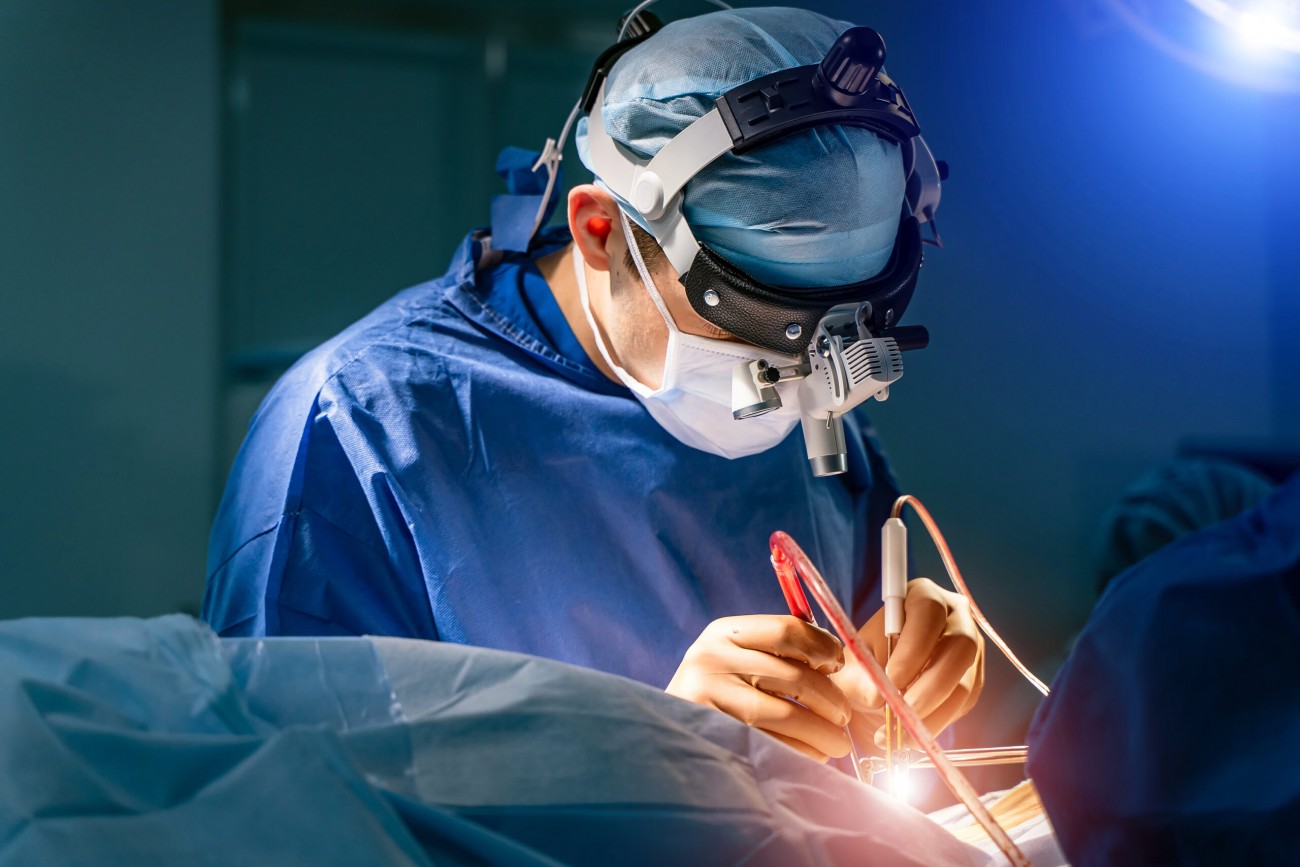
Prof. Dr. Salim Şentürk adopts the principle of maximum safe resection in glioma surgery. Using advanced neuronavigation systems and intraoperative monitoring, he removes as much tumor as possible while protecting critical brain functions.
Other Treatments

Spine Surgery
Surgical treatment of spine and spinal cord diseases

Deformity Surgery
Deformity surgery is the surgical correction of scoliosis, kyphosis, and spinal imbalance. Effective treatment is achieved with modern techniques and implants. Prof. Dr. Salim Şentürk's expertise in complex deformity surgery.

Endoscopic Spine Surgery
Endoscopic spine surgery is a minimally invasive technique performed through an 8 mm incision. Same-day discharge and rapid recovery are possible for lumbar and cervical disc herniations. Prof. Dr. Salim Şentürk's endoscopic surgery expertise.
Peripheral Nerve Surgery
Peripheral nerve surgery treats nerve compressions, injuries, and tumors. Carpal tunnel, cubital tunnel, and nerve tumors are treated surgically. Prof. Dr. Salim Şentürk's nerve surgery expertise.
Reviewed by: Prof. Dr. Salim Şentürk, Neurosurgeon
Last updated: